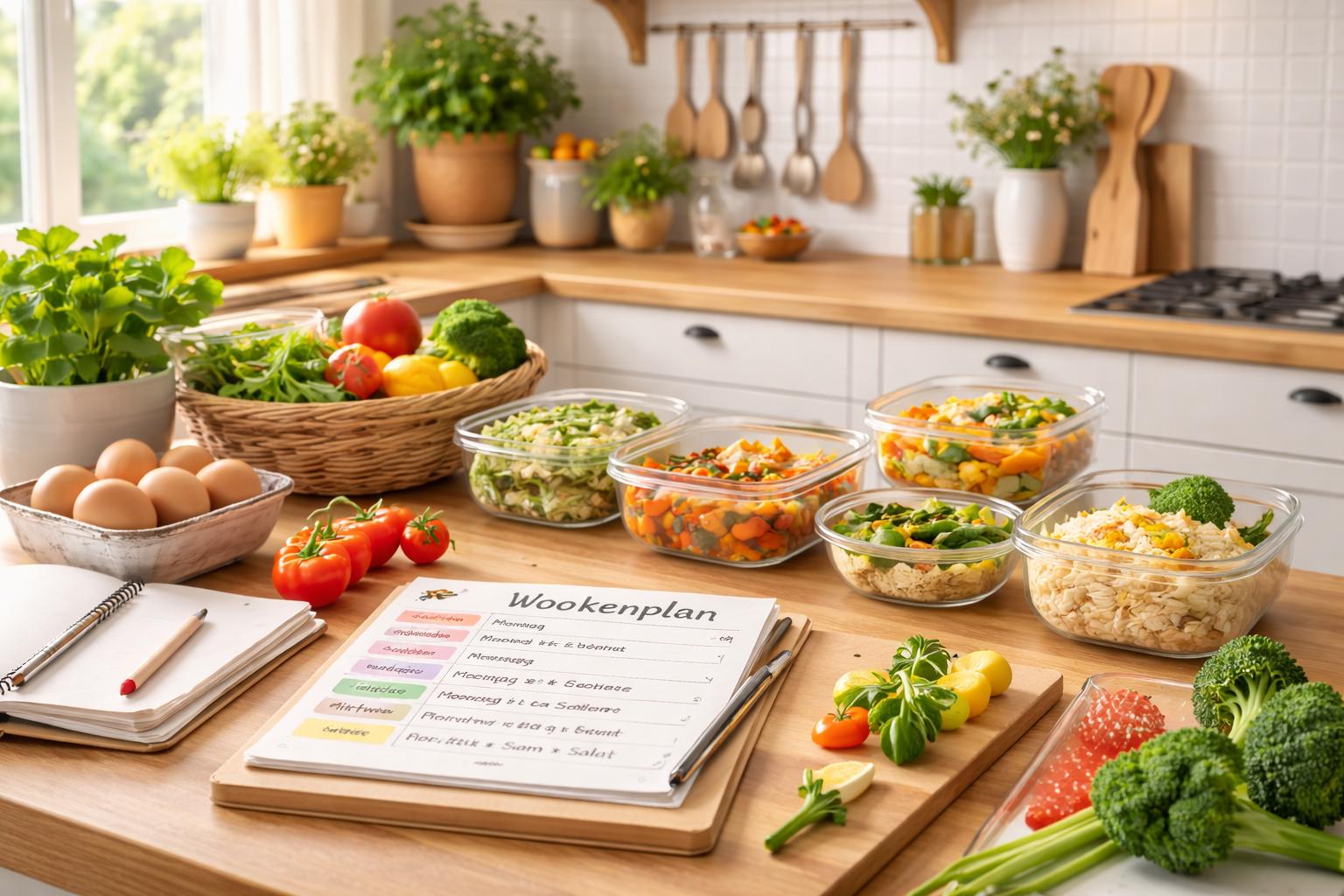
My realistic grocery shopping system for a family of four—without endless supermarket trips, complicated coupons, or spending every evening in the kitchen.
Living on Long Island has its perks. We have beautiful neighborhoods, great schools, and plenty of places to shop.
But there’s one thing about suburban life that drives me crazy: you have to drive almost everywhere.
And when you’re a working parent commuting into New York City, even a simple grocery trip can feel like another exhausting chore.
Between my full-time job, the commute, helping my kids with homework, and driving them to after-school activities, my weekdays are already packed.
By the time I get home, the last thing I want to do is drive to a supermarket, walk through crowded aisles, wait in line, carry everything inside, and somehow still find the energy to cook dinner.
Here’s my confession: I love cooking for my family, but I absolutely hate grocery shopping.
I want my family of four to eat fresh, healthy, home-cooked meals. I also don’t want to spend a fortune on takeout or waste my weekends running errands.
So over time, I’ve developed a grocery shopping routine that works for our busy Long Island lifestyle.
It’s not about extreme couponing, chasing every sale, or visiting five different stores to save a few dollars.
It’s about making fewer decisions, shopping less often, wasting less food, and making everyday life easier.
Here are the six habits that have made the biggest difference for our family.
1. I Buy a Month’s Worth of Protein at Costco
One of the biggest changes I made was cutting back on how often I visit grocery stores.
Instead of shopping for everything every week, I make one big Costco trip each month to stock up on protein and other essentials.
My usual shopping list includes:
- Organic chicken
- Beef
- Fish and seafood
- Frozen foods that are easy to prepare
- Pantry staples and sauces we use regularly
When I get home, I divide the meat and seafood into family-sized portions and freeze them immediately.
This takes a little extra time on shopping day, but it makes dinner preparation so much easier throughout the month.
Instead of wondering what to buy for dinner, I can simply take something out of the freezer to thaw safely in the refrigerator.
Why this saves money
Buying in bulk can lower the price per pound, especially when the unit price is better than at a regular supermarket.
But there’s another benefit that people often overlook.
The fewer times I walk into a grocery store, the fewer opportunities I have to spend money on things I never planned to buy.
Of course, Costco isn’t automatically cheaper for everything. I still pay attention to unit prices and avoid buying more than our family can realistically use.
For me, the biggest benefit is having our main dinner ingredients ready for the entire month.
2. I Order Fresh Groceries During My Train Commute
This might be my favorite grocery shopping trick.
I commute into New York City for work, and my train ride home takes about an hour.
Instead of spending that time thinking about another errand I need to run, I use a few minutes to order fresh groceries from Whole Foods or Amazon Fresh.
I usually order:
- Fresh vegetables
- Fruits
- Milk and yogurt
- Eggs
- Other refrigerated items we need for the week
I schedule delivery based on what’s available in my area.
No parking. No checkout lines. No carrying heavy grocery bags from the store to my car.
Everything arrives at my doorstep.
Is grocery delivery really worth the fee?
I used to think paying for grocery delivery was a waste of money, especially when the supermarket was only about 15 minutes away.
But then I started thinking about the entire shopping trip.
Driving there, finding parking, shopping, waiting in line, loading the car, driving home, and unloading everything can easily take an hour or more.
If I pay around $5 for delivery on an eligible order, that fee can be worth it to me.
Delivery fees, minimum orders, tips, and availability vary, so I always check the total before ordering.
Here’s how I think about it:
If a small delivery fee saves me an hour and helps me avoid unnecessary purchases, it’s not automatically a waste of money.
It can be a practical way to buy back time.
There’s another advantage: online grocery shopping helps me stay focused on my list.
When I shop in person, it’s easy to pick up snacks, seasonal items, or products that look interesting.
Online, I can review my cart, remove anything unnecessary, and see the total before checking out.
That little pause makes a difference.
3. I Cook Dinner Once and Turn It Into Tomorrow’s Lunch
Lunch is one of the easiest places for a busy family to overspend.
Buying lunch in Manhattan can get expensive quickly. A simple salad or sandwich can easily cost $15–$20 or more.
And with two school-age kids who prefer bringing lunch from home, packing lunches is already part of our routine.
But I don’t want to wake up early every morning to prepare four separate meals.
My solution is simple:
Whenever I cook dinner, I make enough for the next day’s lunch.
If I’m making chicken with vegetables and rice, I prepare extra portions.
We eat dinner together, and I pack the remaining food into containers for the following day.
The next morning, lunch is already taken care of.
This doesn’t mean I cook twice as much food every night. I adjust portions based on what everyone will eat and what will keep well for lunch.
How much could homemade lunches save?
Here’s an illustrative example for two working adults.
| Lunch habit | Weekly cost |
|---|---|
| Buying lunch at $18 per person, 5 days a week | $180 |
| Homemade lunches at an estimated $5 per person, 5 days a week | $50 |
| Potential weekly savings | $130 |
That’s approximately $520 over four weeks, assuming both adults would otherwise purchase lunch every workday.
Actual savings depend on ingredient costs, portions, and how often you would have bought lunch.
And the biggest benefit isn’t only financial.
It’s knowing that tomorrow’s lunch is already prepared when I wake up.
One important habit: I refrigerate leftovers promptly and pack them with appropriate cold storage or reheat them safely.
4. I Put Our Weekly Meal Plan on the Refrigerator
One of the most exhausting parts of feeding a family isn’t always the cooking.
It’s deciding what to cook.
Every afternoon, someone inevitably asks:
“What’s for dinner?”
And somehow, even after I’ve answered, someone else asks the exact same question.
So I started posting our weekly meal plan directly on the refrigerator.
Nothing fancy. Just a simple list of what we’re eating each day.
Here’s an example of what a typical week might look like.
| Day | Dinner |
|---|---|
| Monday | Air-fryer chicken, broccoli, and rice |
| Tuesday | Beef and vegetable stir-fry |
| Wednesday | Baked salmon, potatoes, and asparagus |
| Thursday | Chicken fried rice with leftover vegetables |
| Friday | Easy pasta with protein and vegetables |
| Saturday | Family favorite or a flexible meal or Dine out |
| Sunday | Use-up-the-fridge dinner |
I plan meals before placing my grocery order.
That way, I know exactly what ingredients we need and can avoid buying random vegetables that end up sitting in the refrigerator.
It also helps me use the same ingredients across multiple meals.
For example, broccoli might be served with chicken on Monday and used in a stir-fry on Tuesday.
One ingredient, two meals, less waste.
Meal planning doesn’t have to mean following a strict schedule.
Sometimes our plans change. Sometimes the kids want something different. Sometimes I’m simply too tired.
That’s fine.
The menu is there to make life easier, not to create another rule I have to follow.
5. I Keep Weeknight Cooking Under 30 Minutes
I enjoy cooking, but after a long workday, I’m not interested in recipes that require 15 ingredients, four pans, and an hour of preparation.
My usual goal is simple:
One protein, plenty of vegetables, and a meal that takes around 30 minutes of active preparation and cooking whenever possible.
I rely heavily on three cooking methods.
The air fryer
This is probably one of the most-used appliances in our kitchen.
I cook chicken, fish, or another protein, then prepare seasoned vegetables in the air fryer.
It’s quick, easy to clean, and requires less hands-on attention than standing over the stove.
One-pot meals
When I use the stovetop, I try to keep everything in one pot or pan.
I cook the protein, add vegetables and seasonings, and finish the meal with rice, noodles, or another simple side.
Fewer dishes are always a win.
Sheet-pan dinners
For fish or chicken, I often use the oven.
I arrange the protein and vegetables on a baking sheet, season everything, and roast until fully cooked.
Some meals take longer than 30 minutes depending on the ingredients, but the hands-on preparation is usually minimal.
While dinner cooks, I can help with homework, organize school bags, or finally sit down for a few minutes.
For me, that’s what convenient cooking should look like.
Healthy family meals don’t have to be complicated to be worthwhile.
6. I Use What We Have Before Buying More
One of the biggest grocery expenses isn’t something you buy.
It’s the food you throw away.
We’ve all done it.
You buy fresh spinach with good intentions, forget about it in the back of the refrigerator, and discover it a week later.
Or you buy more meat because you can’t remember what’s already in the freezer.
I used to do this more often than I’d like to admit.
Now, before placing another grocery order, I check what we already have.
I look through the refrigerator, freezer, and pantry and ask myself:
- What needs to be eaten first?
- What can I turn into another meal?
- Do we really need more groceries this week?
- Can I use frozen vegetables instead of buying fresh ones?
Sometimes I realize we already have enough food for another two or three dinners.
That means one less grocery order and less food going to waste.
I also try to use older frozen ingredients first and label packages with the date.
My goal isn’t to eliminate food waste completely. With two kids and a busy schedule, that’s not always realistic.
But even reducing waste makes a difference.
And I never try to use food that’s spoiled or unsafe just to avoid throwing it away.
What This Grocery System Could Save
The biggest financial benefit comes from combining several small habits rather than relying on one dramatic money-saving trick.
Here’s a hypothetical four-week example of how the savings might add up for a family.
| Habit | Potential savings over 4 weeks |
|---|---|
| Two adults bringing homemade lunches instead of buying lunch | $520 |
| Avoiding $15 in impulse purchases each week | $60 |
| Reducing food waste by $10 per week | $40 |
| Grocery delivery fees, assuming $5 per week | -$20 |
| Illustrative net savings | $600 |
These are examples, not my family’s tracked savings or a guarantee of what another household will save.
The lunch calculation assumes homemade meals cost $5 per serving instead of an $18 purchased lunch. It also assumes the impulse-purchase and food-waste savings are separate.
Your actual results may be much lower or higher.
The important point is that saving money doesn’t always require buying cheaper food.
Sometimes it’s about changing how you shop, plan, and cook.
And while grocery delivery costs money, it may still fit into a money-saving routine if it reduces unnecessary spending and helps you make better use of what you buy.
The Real Benefit: Getting My Weeknights Back
When I first started simplifying our grocery routine, my main goal wasn’t even to save money.
I just wanted to feel less exhausted.
After spending the day at work and commuting home, I didn’t want grocery shopping to take away the little time I had left with my family.
I wanted to cook dinner, help my kids, enjoy our evening, and not feel like I was constantly racing against the clock.
Buying protein in bulk, ordering fresh groceries online, cooking extra portions, and planning meals ahead of time have made our routine much more manageable.
I’m still cooking. I’m still feeding four people. And I still have busy days when nothing goes according to plan.
But I’m spending less time running errands and more time doing things that matter to me.
And that, to me, is just as valuable as saving money.
Final Thoughts: Saving Money Should Make Your Life Easier
There’s plenty of advice online about saving money on groceries.
Use coupons. Visit multiple stores. Compare every sale. Make everything from scratch.
Some of those strategies work beautifully for certain families.
But for a working parent with a long commute, limited time, and two kids with busy schedules, they aren’t always practical.
I’ve learned that the best money-saving system isn’t necessarily the one that saves every possible dollar. It’s the one you can realistically stick with.
For our family, that means shopping less frequently, using grocery delivery strategically, cooking simple meals, and making the most of the food we already have.
You don’t need a perfect grocery budget or an elaborate meal-planning spreadsheet to get started.
Even one small change—like doubling dinner portions for tomorrow’s lunch—can make your weekdays easier and help you spend less.
Because building a better financial future isn’t only about earning more or investing wisely.
Sometimes, it’s about finding a smarter way to handle the everyday things that take up our time and money.
What grocery shopping or meal-prep habit has made your family’s life easier? Share your favorite tip in the comments!
By Irene | Money Bloom Daily
Money Bloom Daily shares practical money-saving ideas and real-life financial decisions for everyday families. This article reflects personal experience and illustrative calculations. Grocery prices, delivery fees, and savings vary by household and location.
Leave a Reply